
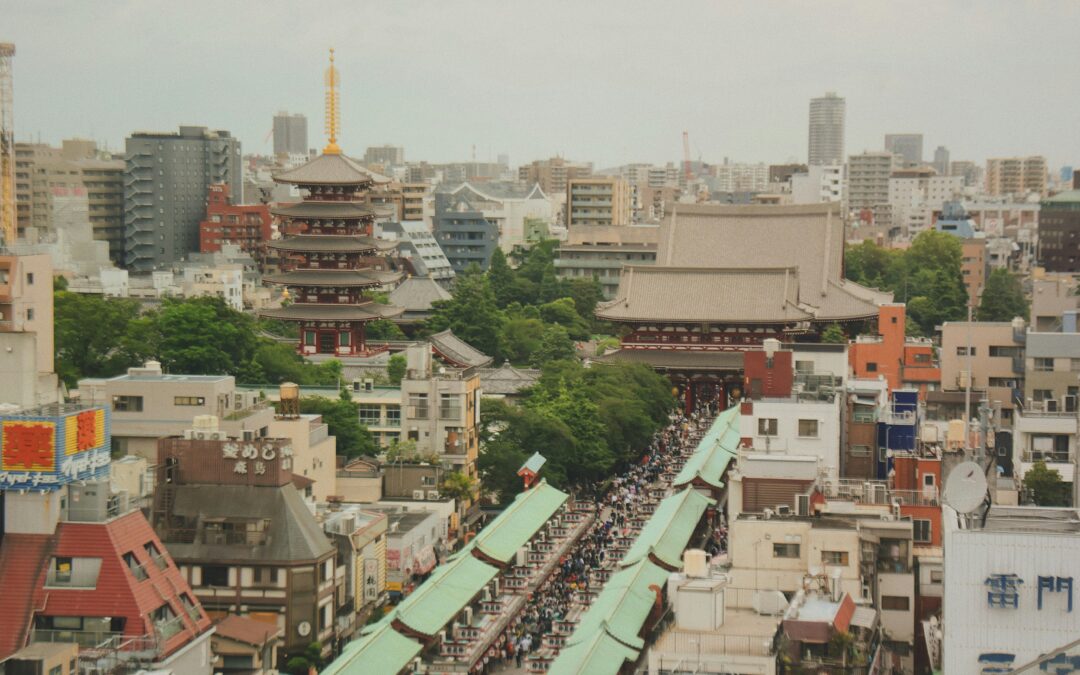
There are travel stories you tell to make people laugh, and then there are travel stories you tell to make people believe you were either very brave or very stupid. This one sits somewhere gloriously in the middle. Picture it: a sleep-deprived Aussie in Tokyo, the neon glow of Shinjuku, a rumbling belly, and a queue that looked promisingly noodle-shaped. I thought I’d finally cracked the ramen code. I was wrong — but happily, very happily, wrong.
It began with that universal travel truth: if there’s a line, the food must be good. I was wobbling along behind a group of locals who looked purposeful and slightly humid — classic ramen-energy. They didn’t look like they were waiting for art-house cinema; they looked like they were on a mission. I planted myself at the end of the line, checked my phone for a signal (useless), and tried to practice polite phrases in a way that didn’t sound like a confused Australian seal. I could hear taiko drums somewhere in the distance, but I assumed that was Tokyo being atmospheric.
After about ten minutes a couple in front of me turned and handed me a narrow white towel and a short, indigo jacket with bold kanji on the back. “Happi,” someone said — and judging by the smile and the way it was tied, it seemed to be both a costume and a warm invitation. For the record: when someone thrusts a traditional coat at you and grins like it’s no big deal, you accept. That is the first rule of peak travel memory-making.
Happi coats are a common sight at Japanese festivals — short cotton jackets often emblazoned with the emblem of the event or the local group running it. They work a bit like team shirts: you put one on and you’re suddenly part of something. That something, I later learned properly, was not ramen. It was a matsuri — a local Shintō festival — and the jacket, I realised as I was nudged forward, was not an apron but a uniform.
One thing about being a visiting Aussie is our uncanny enthusiasm for participating — and for accepting the generous hospitality of strangers. If a person in Tokyo offers you a happi and a front-row spot in a procession, refusing feels like declining the sun. So I stepped forward, and then everyone stepped forward, and then the little line turned into a rolling group. Someone put a towel around my neck, another slid a sash over my waist, and the owner of the jacket winked and shoved a handheld drum stick into my hand as if I’d been drumming in my sleep for years.
I could have clambered out then, but the drums were infectious. The sound snaked up alleyways and bounced off apartment blocks. Voices called a rhythm, and people responded like a living instrument. A portable shrine — a mikoshi — lumbered into view, bedecked with lacquer and gold, carried on the shoulders of a dozen or so parishioners. It wasn’t the Gion Matsuri, or one of those huge, city-wide spectacles in guidebooks, but it had every element that makes a matsuri a matsuri: music, movement, a sense of communal blessing, and absolute, uncompromising joy. The mikoshi is carried to bless the neighbourhood and bring the kami (the deity) out into the streets; watching it is watching a community give thanks.
Here’s where my internal monologue abandoned me and genuine joy took over. The festival guards (if that’s even the right word — they were more like cheerfully efficient uncles) began teaching me a simple step: a sideways hop, a quick clap, and an emphatic shout on the downbeat. The dance was less choreography and more communal call-and-response. Someone handed me a song-sheet with kana I couldn’t read but which my body somehow followed. They corrected my foot placement with the same tenderness I’d expect for a novice at backyard cricket. One woman showed me how to cup my hands for the clap so it sounded right; a teenage boy taught me the shout with the kind of hushed reverence Austalian footy fans reserve for the anthem. There are no words for how wonderfully silly and grounding that felt.
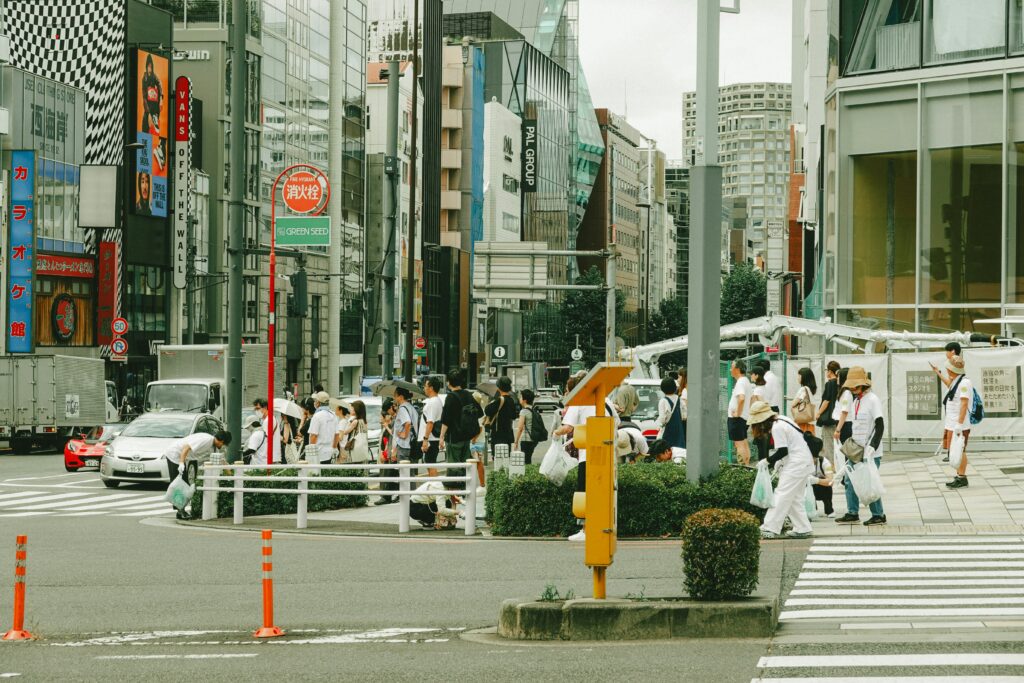
There is a deep cultural logic to what was happening. Festivals in Japan are not tourist spectacles; they are communal rites that bind neighbourhoods to their shrines, celebrate seasonal rhythms, and, not insignificantly, provide a chance for everyone to be part of something bigger than themselves. I was accidently inducted into a micro-community for the evening: we marched, we chanted, and we sang. The dance moves were taught on the fly, and within minutes I was clapping in sync with a group of people whose names I didn’t know but who, for the time being, felt like family.
All this happened while my brain stubbornly tried to reconcile the fact that ramen had been replaced by ritual. I later asked someone what had gone wrong. They laughed and said I’d stood in the wrong queue — not a line for noodles, but a queue for joining the local team in the procession. It’s a classic Tokyo moment: everything looks like a queue, and everything is politely organised. Queue-culture in Japan is famously disciplined; people line up for trains, shops, and sometimes life experiences without the pushing and jostling that makes other cities feel like contact sports. That general respect for order meant the transition from “line” to “parade” was seamless — nobody yelled, nobody panicked, everyone simply integrated me like a friendly stray dog.
At some point a stall vendor — sensing an opportunity — thrust a bowl of steaming ramen into my hands. A double hello. Apparently participation in the parade comes with perks: free food, spirited waving, and a chorus of “arigatou!” that left me smiling the way you do when you’ve been given a surprise last-minute ticket to something brilliant. I slurped the noodles properly (it turns out slurping is not rude but expected — it cools the broth and signals appreciation), which earned me an approving thumbs-up from a salaryman who’d been at my side since the very start.
By the end of the night I had been photographed more times than I get likes on Instagram, taught the rough outline of a traditional festival chant, and honoured with a handshakes-and-hugs send-off that felt unexpectedly intimate. We popped off the main street into a side lane and traded names — mine pronounced with a sweetness that made every syllable feel new. I learned that the festival was annual, that participation was an expression of neighbourhood pride, and that sometimes, the simplest way to understand a culture is to get clumsily involved in its noise and rhythm.
If I learned anything that night, it’s that travel is at its best when it’s unpredictable. There are itineraries, and then there are the tiny human detours that turn a holiday into a story you’ll tell for years. I came for ramen and stayed for ritual. I left with a happi coat draped over my arm (a gift), a throat a little hoarser than when I arrived, and an enormous gratitude for the strangers who treated a lost tourist like kin.
Practical takeaway for fellow travellers: if you ever find yourself in a line that suddenly morphs into a procession — go with it. Accept the jacket, try the clap, learn the shout, and slurp your noodles properly. Japanese festivals are living culture, and the people who organize them are often delighted to have visitors join in respectfully. Read up on matsuri and what to expect (mikoshi, happi, yukata, and rhythms) before you go if you like context; resources from trusted travel and cultural organisations can give you the background so you can appreciate the ritual even more when it happens.
The next morning I woke with the afterglow of a night where translation failed spectacularly — and translation, in the best possible way, triumphed. Language could not capture what rhythm did. I had come to Tokyo looking for comfort food and instead found a slice of communal life: loud, kind, and insistently human. If you ever hear drums in an unfamiliar alley, follow them. You might miss your train, but you won’t miss a story.