
There are moments in every traveller’s life when you realise—suddenly, violently—that the world does not revolve around the café culture you grew up with. For some, this occurs gently, like learning that not every country believes avocado belongs on toast. For me, however, the lesson arrived via a Roman barista wielding an espresso machine like a holy relic and staring me down as though I’d just insulted the Pope.
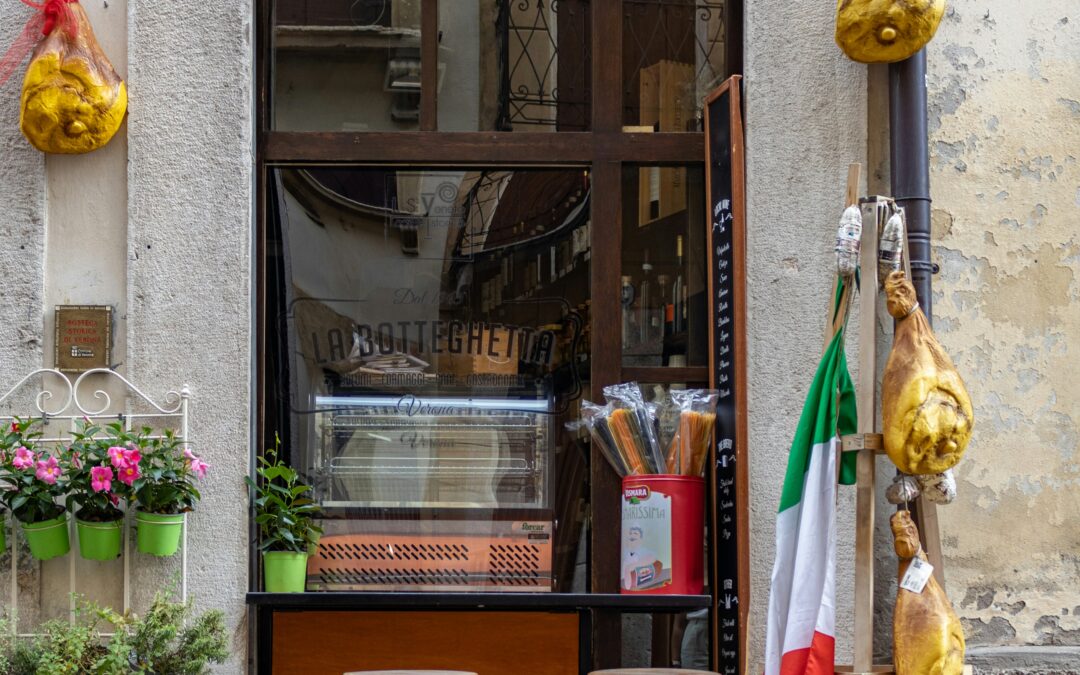
It was my first morning in Rome. The sun glowed gold on cobblestones, scooters buzzed like caffeinated bees, and I—arms tucked awkwardly into my backpack straps—wandered into a small café that looked like it had been carved straight out of a Fellini film. Think marble counters, walnut shelves, and baristas so impeccably dressed they made the average Melbourne barista look like an extra in a camping ad.
The place smelled like heaven: warm pastries, freshly ground beans, and a hint of something sweet and inexplicably Roman. I took a deep breath. This, I told myself, is the moment I blend in. I am sophisticated. I am worldly. I am no longer the tourist who tripped on the uneven pavement outside the Colosseum twenty minutes ago.
I stepped up to the counter and ordered with the confidence of a lifelong brunch enthusiast:
“Hey! Can I grab a flat white?”
Silence. Absolute, echoing, espresso-machine-hissing silence.
The barista—a man of about sixty with eyebrows that seemed capable of independent judgement—leaned forward.
“Scusi… a what?”
“A flat white,” I repeated, gesturing vaguely, as though hand motions might bridge the cultural divide. “Just, you know… coffee with milk?”
His eyes narrowed the way my Year 9 maths teacher’s did when I pretended long division was a personal attack. The barista looked around, as if seeking divine intervention, then shrugged and muttered something that sounded like Madonna mia.
I should’ve stopped. I should’ve ordered a simple cappuccino, which according to the Italian Espresso Institute (a very real organisation that sounds made up but absolutely isn’t) is the socially acceptable morning drink. But no. My caffeine-deprived Australian brain surged ahead.
“Yeah, just like… mostly milk, but not too much, and a bit of foam. Strong-ish coffee. Smooth. Creamy. You know.”
The barista blinked slowly, as if processing the tragedy unfolding before him.
He turned to his colleague, who stared at me with the same expression people reserve for odd sea creatures washed ashore. A rapid-fire discussion ensued in Italian—voices rising, hands waving, glances darting in my direction. I caught the words straniero (foreigner), latte (milk), and something that might have been blasphemia (you can guess).
Finally, resolved to attempt this abomination, the barista produced an espresso cup the size of a thimble. He pulled a shot so dark it could absorb light, then splashed in a whisper of milk and shoved it towards me.
This was not a flat white. This was a war crime.
I stammered, “Oh! No, I meant in a bigger cup?”
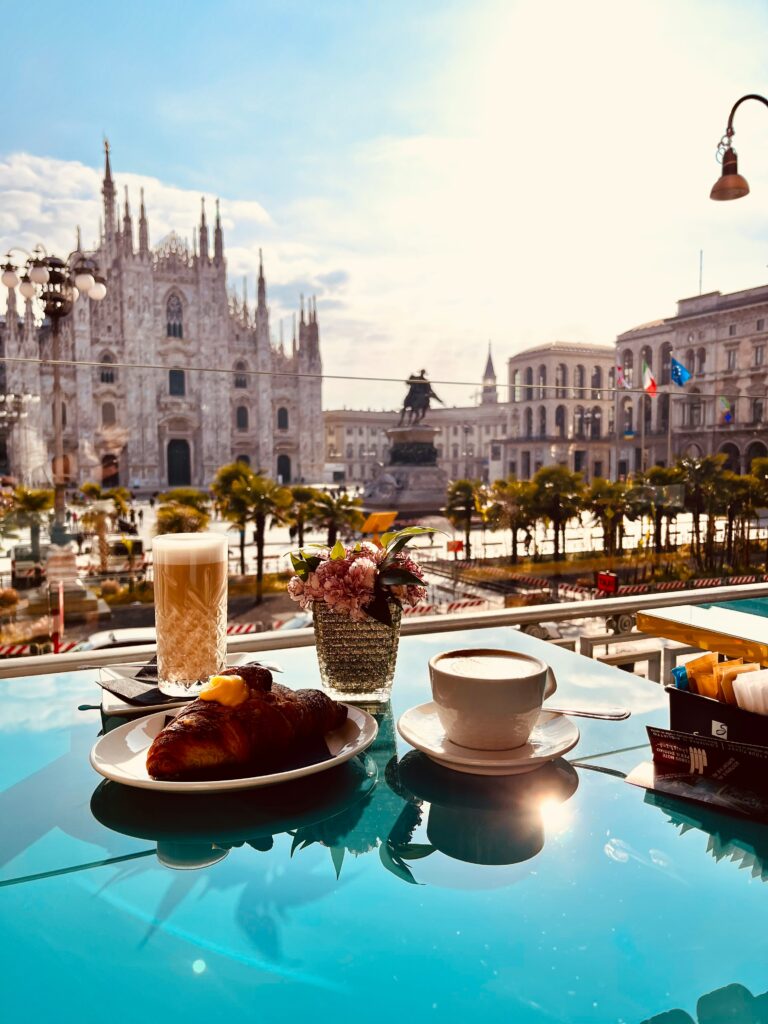
He looked offended. Deeply offended. According to the Italian National Coffee Committee (another genuine entity), coffee should be consumed quickly, standing at a bar, not sipped like a long-form beverage requiring emotional commitment. The idea of a “bigger cup” was clearly an existential threat.
The barista launched into an impassioned speech. His colleague joined. A third barista emerged from the back, flour-dusted from pastry duties but equally alarmed by the situation. By now, I was certain ambassadors were being summoned.
Panicking, I did what any Aussie caught in a cultural cyclone would do: I apologised profusely and backed away, knocking into a display of biscotti and scattering them with the grace of a startled emu. This did not help.
But then—salvation arrived.
Three nonnas, who had been watching the meltdown while stirring tiny coffees of their own, rose from their seats like a council of ancient, benevolent gods. They approached me as a unit, shooing away the agitated baristas and clucking sympathetically.
One of them, wearing an apron embroidered with lemons, tapped my arm and said, “Vieni, tesoro. Come. We teach you.”
Before I could protest, I was ushered to their table and plonked into a chair. A fresh espresso materialised in front of me.
“Drink,” commanded Nonna Lemon.
“Short, strong,” added the second nonna, who wore glasses thick enough to magnify the entire Pantheon.
“Is good for the soul,” concluded the third, patting my cheek in a way that suggested she’d already adopted me.
Now, every guidebook—from Lonely Planet to the National Geographic Traveller series—will tell you Italy takes its coffee rituals seriously. What they won’t tell you is that Italian grandmothers take them personally. Within moments, I had entered Coffee Bootcamp.
Lesson One: Milk is for the morning, and only the morning. After 11 a.m., ordering milk in coffee is, according to Italian culinary historian Alberto Capatti, “a sign you are either a child or gravely unwell.”
Lesson Two: Espresso is not meant to be nursed. “It is like… how you say… a kiss,” Nonna Glasses said. “Short. Beautiful. Quick.” The nonnas nodded solemnly, as if imparting ancient wisdom passed down since Julius Caesar first complained about watery coffee.
Lesson Three: Never ask for anything flat. Italians do not do flat. Their coffee has pride. Their milk has pride. Even their foam has pride.
By the time the espresso was drained (in one go, as instructed), the baristas had simmered down and cautiously returned to their stations. The nonnas declared me “educato”—educated—and released me back into the wilds of Roman society.
But as I stood to leave, the oldest nonna took my hand. “You come back tomorrow,” she insisted. “We make you proper Italian.”
“Will I learn to order coffee better?” I asked.
She laughed. “No, tesoro. We teach you to stop ordering coffee like Australian.”
Fair.
When I finally stepped back outside, the city felt warmer, the sunlight brighter, the scooters louder, or maybe that was just the espresso buzzing through my bloodstream like a Roman gladiator on a mission.
Later that day, still jittery, I looked up Italian coffee etiquette from the International Coffee Organisation—just to check whether I had, in fact, committed an international offence. Their reports do warn that Italy views coffee as a “cultural cornerstone integral to national identity.”
So yes. Technically, I had tampered with a cornerstone of Italian identity before breakfast.
But here’s the thing: travel isn’t meant to be smooth. It’s meant to humble you, confuse you, and sometimes force you into the tutelage of three caffeinated Italian grandmothers.
And honestly? I wouldn’t trade that accidental diplomatic incident for any flat white in the world.
Because in the end, I didn’t just get a coffee.
I got a story—strong, short, beautiful, and undeniably Italian. Just the way the nonnas would want it.
If you’d like another story—perhaps the sequel where I tried to order a latte in Florence and was given a glass of plain milk—I’m ready when you are.