
I knew I was in trouble the moment the waiter frowned.
Not a dramatic frown. Not a cartoon villain scowl. Just a subtle tightening around the eyes — the kind that says, you’ve misunderstood something fundamental, and now I must decide whether to correct you.
As an Australian, this rattled me.
Back home, if you order a chicken parmigiana with extra chips and no salad, the waiter nods like you’ve just recited sacred scripture. Choice is king. The customer is always right, even when the customer is absolutely, objectively wrong.
In France, apparently, the customer is… audited.
The Order That Triggered an International Incident
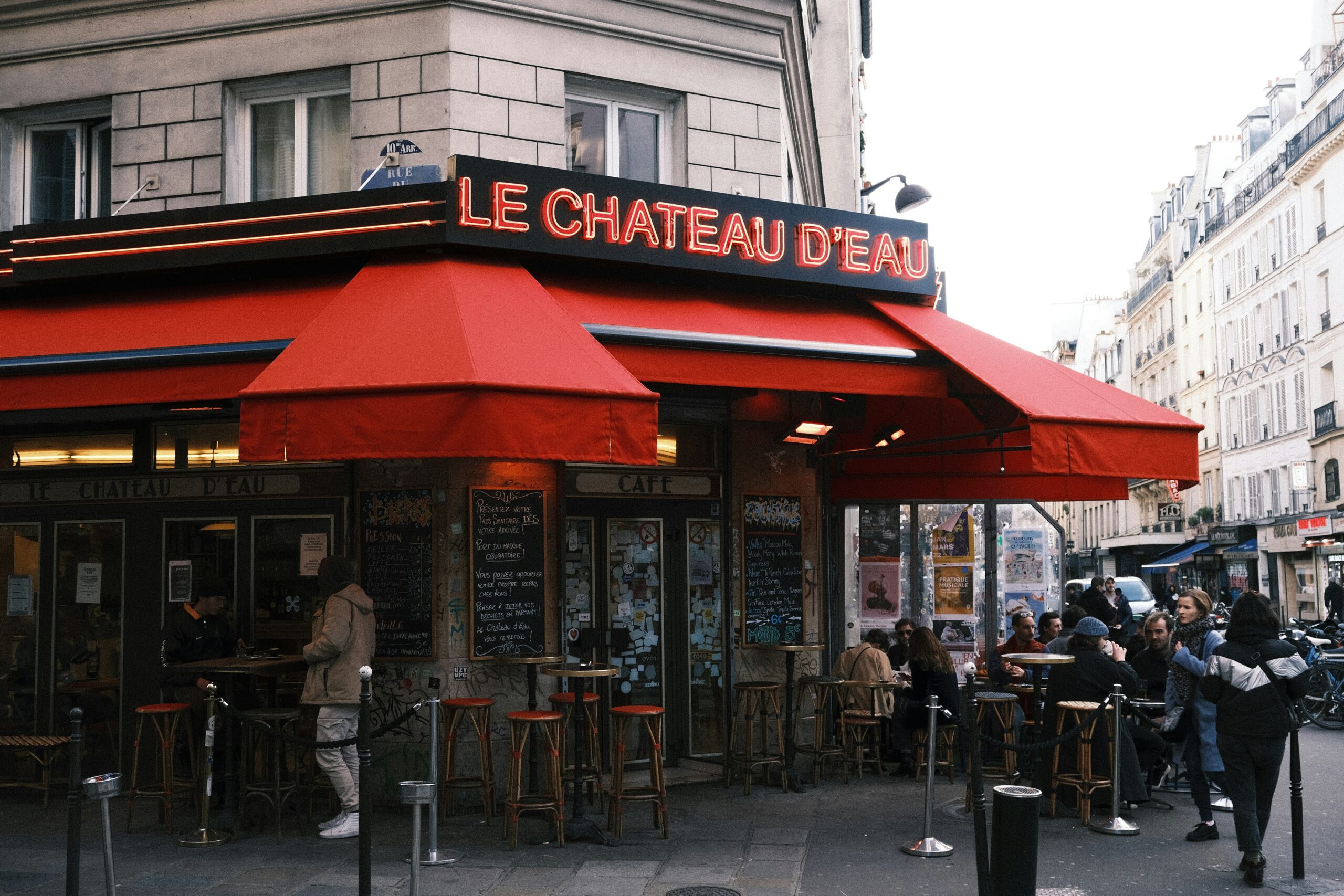
The setting was a small Parisian bistro — the kind with chalkboard menus, mismatched chairs, and a sense of quiet confidence that comes from not needing to impress tourists. No laminated menus. No photos. Just words, written by someone who expects you to trust them.
I did not.
Jet-lagged and emboldened by two glasses of house red, I ordered with confidence. Too much confidence.
I asked for a particular main, requested a substitution, and — this is where it all went wrong — asked if the cheese course could come before the meal.
The waiter blinked.
He looked at me.
He looked at the menu.
He looked back at me.
Then, calmly, politely, devastatingly, he said:
“No.”
Not non. Not désolé. Just no.
He then explained — slowly, like one might explain gravity to a golden retriever — that the dish did not work that way, the cheese did not belong there, and that I would instead be having this other thing, which was better.
And before I could mount a defence, he walked away.
Order changed. Control gone.
The Australian Instinct: Push Back Politely, Then Complain Later
Every Australian instinct screamed rebellion.
We are raised on the idea that flexibility is kindness. That substitutions are harmless. That hospitality means accommodating preferences, even baffling ones. According to cross-cultural research from Hofstede Insights, Australia ranks high on individualism — meaning personal choice is deeply embedded in how we expect services to work.
France, meanwhile, operates on a different axis.
Here, dining is not a transaction. It’s a performance. A tradition. A hierarchy.
And the waiter? He is not your mate doing a shift between uni classes. He is a professional custodian of the meal.
This isn’t snobbery — it’s structure.
Culinary Authority Is a Thing (And France Takes It Seriously)
In France, food is cultural infrastructure.
UNESCO doesn’t hand out compliments lightly, but French gastronomy is officially recognised as Intangible Cultural Heritage of Humanity, acknowledging not just the food itself but the ritual of dining. UNESCO
That ritual includes:
- Specific courses
- Specific sequences
- And yes, someone else deciding what makes sense
Even institutions like Michelin Guide emphasise harmony, balance, and the chef’s intent over customer customisation. A dish is designed. Altering it isn’t a preference — it’s interference.
Suddenly, the waiter’s refusal wasn’t rude. It was protective.
The Cheese Lesson (There’s Always a Cheese Lesson)
When the meal arrived — the correct one — it was, annoyingly, perfect.
The flavours made sense. The pacing worked. The wine pairing (which I did not choose) elevated everything. And when the cheese course finally came — after the main, exactly where it belonged — I understood what the waiter had saved me from.
Cheese before the main would have bulldozed my palate.
In France, cheese isn’t a snack. It’s a punctuation mark. A transition. A deliberate pause before dessert. According to guidance from France’s national dairy and gastronomy bodies, cheese is positioned late in the meal to complement digestion and flavour progression — not fight it. CNIEL
The man knew his cheese.
And I, clearly, did not.
Confidence vs Competence: A Travel Reality Check
This is where the story stopped being about dinner.
As travellers — especially Australians — we often mistake confidence for competence. We assume that because we can choose, we should. But travel has a way of exposing the limits of that mindset.
Anthropologists and tourism researchers have long noted that cultures with strong food traditions often prioritise expert authority over consumer preference. France is a textbook case. Dining etiquette guides published by institutions like Institut Français explicitly frame the server as a guide, not a servant.
You are there to be led.
Once you accept that, something shifts.
What I Learned by Letting Go of the Menu
Letting the waiter take control did three things:
- It improved the meal.
Objectively. I ate something better than what I would’ve ordered. - It reduced decision fatigue.
Travel is exhausting. Every choice costs energy. Surrendering small decisions can be freeing. - It reminded me I was a guest, not a director.
I wasn’t there to customise France to my preferences. I was there to experience it as it is.
Psychologists studying decision-making have shown that relinquishing control in expert-led environments often increases satisfaction — especially when the authority is legitimate. Food, it turns out, is one of those environments.
The Australian Takeaway (With a Side of Humility)
This isn’t a call to abandon your preferences entirely. Allergies matter. Boundaries matter. But not every deviation is a hill worth dying on — especially when someone else has dedicated their life to knowing exactly how something should be done.
In Australia, hospitality bends to the customer.
In France, hospitality stands its ground.
Neither is wrong. But one will absolutely change your order without asking.
And sometimes? That’s the gift.
Final Thoughts from Someone Who Now Trusts the Cheese Guy
I left that restaurant lighter — not just from the meal, but from the quiet realisation that control is overrated.
Travel isn’t about replicating home with better views. It’s about stepping into systems that work differently and letting them teach you something — even if that lesson comes via a stern man with a napkin over his arm.
So if a French waiter ever tells you your order is wrong?
He might be right.
And if you’re lucky, you’ll listen — surrender the menu, trust the process, and discover that some of life’s best outcomes arrive when you stop insisting and start tasting.