
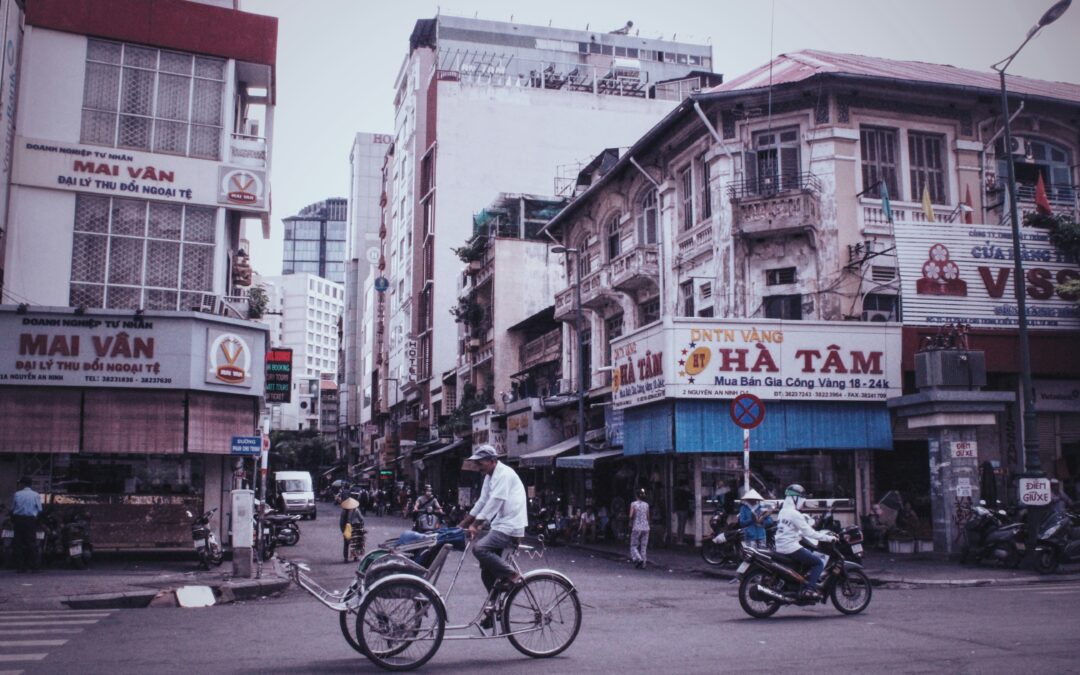
I didn’t set out to become a local landmark.
When I landed in Vietnam, my goals were modest: eat everything, survive crossing the road, and not embarrass Australia too badly in public. At no point did I plan on becoming “the tall one”—a kind of roaming human reference point used for photos, directions, and the occasional unsolicited sporting career advice.
Yet from the moment I stepped out of Noi Bai International Airport in Hanoi, it was clear that I was no longer just a bloke with a backpack. I was a spectacle. A vertical event. A walking comparison chart.
Vietnamese men average around 164 cm in height, according to data frequently cited by the World Health Organization. I, meanwhile, am 191 cm on a good posture day. This meant that, in crowded streets, I moved through Hanoi like a periscope. I could see temples, traffic, and impending bad decisions well before anyone else.
At first, it was deeply uncomfortable.
Hanoi is busy in a way that feels alive rather than aggressive. Scooters hum like insects. Street vendors squat calmly beside bubbling pots of pho. According to Lonely Planet, it’s one of Southeast Asia’s most densely populated capitals, and it feels like it. In the middle of it all, I stuck out like a malfunctioning lamppost.
People stared. Kids pointed. Tourists whispered. Locals smiled politely and then immediately asked if they could take a photo.
The first time it happened, I panicked. I assumed I’d done something wrong. Maybe my singlet was offensive. Maybe thongs were illegal north of the 17th parallel. But no—someone just wanted a picture with me, because I was tall.
That was it. That was the crime.
By day two, I was getting asked for directions despite having absolutely no idea where I was. I don’t speak Vietnamese beyond “xin chào” and “cảm ơn,” yet strangers approached me with maps, phones, and hopeful expressions, convinced that height equals authority.
There’s a concept in social psychology called the halo effect, discussed extensively by institutions like Stanford University, where one noticeable trait causes people to assume competence in unrelated areas. Apparently, being tall means you know where the post office is.
It escalated in Ho Chi Minh City.
Ho Chi Minh City—still called Saigon by everyone who lives there—is louder, hotter, and faster. The scooters multiply. The buildings climb. The energy never switches off. UNESCO recognises Vietnam’s cities as places where old and new exist side by side, and nowhere is that clearer than here: colonial architecture shadowed by glass towers, ancient markets pressed up against coffee shops selling drinks that cost more than my dinner.
And in the middle of it all, there I was, being asked—on three separate occasions—if I played basketball professionally.
One bloke, dead serious, told me I “had the body for it.” I thanked him, knowing full well the only thing I’ve ever dunked successfully is a Tim Tam in tea.
At first, being constantly noticed made me shrink inward. I became self-conscious. I hunched. I tried to blend in, which is a ridiculous thing for a tall Australian man to attempt in Vietnam. You don’t blend in; you loom.
But something shifted about a week in.
I was sitting on a tiny plastic stool—designed for someone half my size—eating banh mi from a street stall. A group of school kids walked past, giggling. One of them stopped, pointed at me, and said something to his mates. Instead of looking away, I smiled and waved.
They lost their minds.
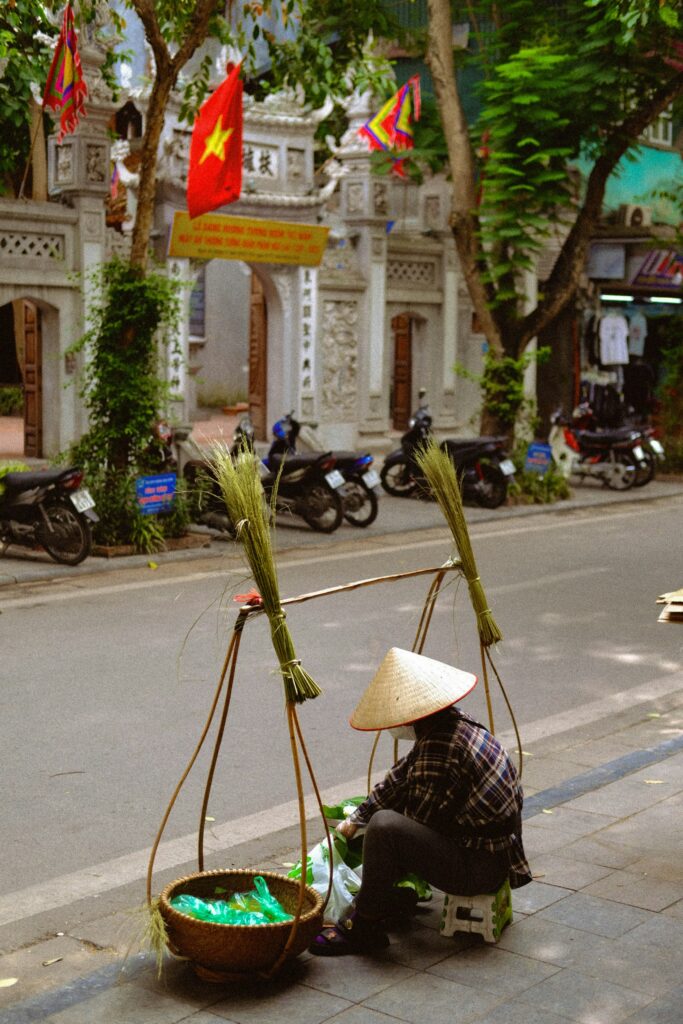
Within seconds, I was surrounded by teenagers practising their English, asking where I was from, how tall I was, whether Australia had “big spiders” (yes), and why I was so tall (milk? genetics? divine punishment?). Their curiosity wasn’t mocking—it was joyful.
The Australian Department of Foreign Affairs often describes Vietnam as a country known for its hospitality, and it’s not wrong. Once you stop assuming attention is hostile, you realise it’s usually just interest. People weren’t laughing at me; they were engaging with me.
Being “the tall one” turned into an icebreaker.
Taxi drivers asked questions. Café owners offered extra chairs. Random uncles gave me life advice in Vietnamese I didn’t understand but deeply appreciated. A woman in Hoi An adjusted my posture unprompted, as if she were personally invested in my spinal health.
Hoi An, in particular, was where the lesson landed.
The ancient town, protected as a UNESCO World Heritage Site, is slower, softer, and bathed in lantern light at night. Walking along the river, I passed a group of locals fishing. One of them waved me over, gesturing that I should try.
I stood there—awkward, towering, completely out of place—holding a fishing rod I didn’t know how to use. Everyone laughed, including me. It didn’t matter that I was different. It mattered that I was willing to join in.
Anthropologists often talk about cultural humility—the idea that learning another culture isn’t about mastering facts but about accepting you’re not the centre of it. Being tall in Vietnam forced that on me daily. I couldn’t disappear. I couldn’t pretend I wasn’t noticed. All I could do was respond with kindness, curiosity, and a sense of humour.
And humour, it turns out, is universal.
By the end of my trip, I stopped trying to minimise myself. I stood up straight. I said yes to photos. I laughed when kids measured themselves against me. I let strangers call me “big brother” and ask about Australia like it was a mythical place where everyone surfs to work.
Vietnam didn’t make me smaller. It made me more aware.
Travel does that when you let it. According to studies published by the American Psychological Association, exposure to unfamiliar cultures increases empathy and cognitive flexibility. In simpler terms: you stop taking yourself so seriously.
I arrived in Vietnam worried about standing out. I left understanding that standing out isn’t the problem—how you stand out is.
Sometimes you’re the tall one. Sometimes you’re the clueless one. Sometimes you’re the foreigner on a plastic stool trying not to fall over. And sometimes, if you’re lucky, you’re all of those things at once—laughing, learning, and connecting in ways you never planned.
I didn’t come to Vietnam to learn about humility. I came for the food and the chaos. But somewhere between the photos, the questions, and the basketball suggestions, I learned to laugh at myself—and that’s a lesson worth carrying home, no matter how tall you are.